

Switching Your Heating Back On? Here’s What to Check Before Winter
As summer starts to draw to a close and the evenings become cooler, many of us will be reaching for the thermostat for the first time in months.
But after sitting relatively unused throughout the warmer weather, your central heating might not behave exactly as expected when you switch it back on.
You might find that a radiator stays cold, the boiler pressure has dropped, the system makes an unfamiliar noise or, in some cases, the heating simply doesn’t come on at all.
The good news is that not every problem means something has seriously gone wrong.
Here are some simple checks you can make when switching your heating back on after summer — and some signs that it might be time to call a heating engineer.
1. Turn the heating on before you actually need it
Don’t wait for the first properly cold evening to discover that your heating isn’t working.
Switch your central heating on now and let it run long enough for the boiler and radiators to reach temperature. Walk around the house and check that each radiator is warming up as expected.
Doing this in early autumn gives you time to identify any problems before your heating becomes essential.
If everything heats up normally, great — your system has passed its first test.
If it doesn’t, the next few checks may help identify what’s happening.
2. Check your boiler pressure
If you have a sealed central heating system, take a look at the pressure gauge or display on your boiler.
As a general guide, many domestic boilers operate at around 1 to 1.5 bar when the system is cold, although you should always check the manufacturer’s instructions for your particular boiler.
If the pressure is too low, your boiler may refuse to operate or may display a fault code.
A small reduction in pressure over a long period isn’t necessarily unusual, particularly if radiators have previously been bled. However, if the pressure repeatedly drops after being topped up, or suddenly falls significantly, there could be a leak or another fault that needs investigating.
Never keep repeatedly topping up a system that is continually losing pressure without finding out why.
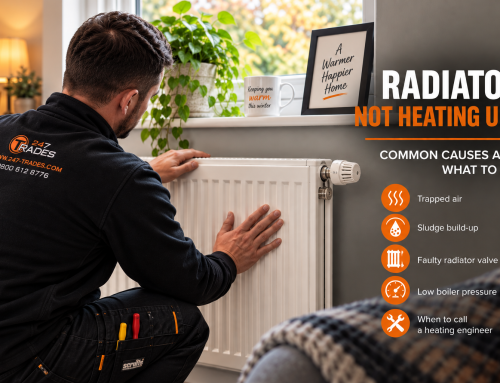
3. Check whether all of your radiators are getting hot
Once the heating has been running for a while, check the radiators throughout your home.
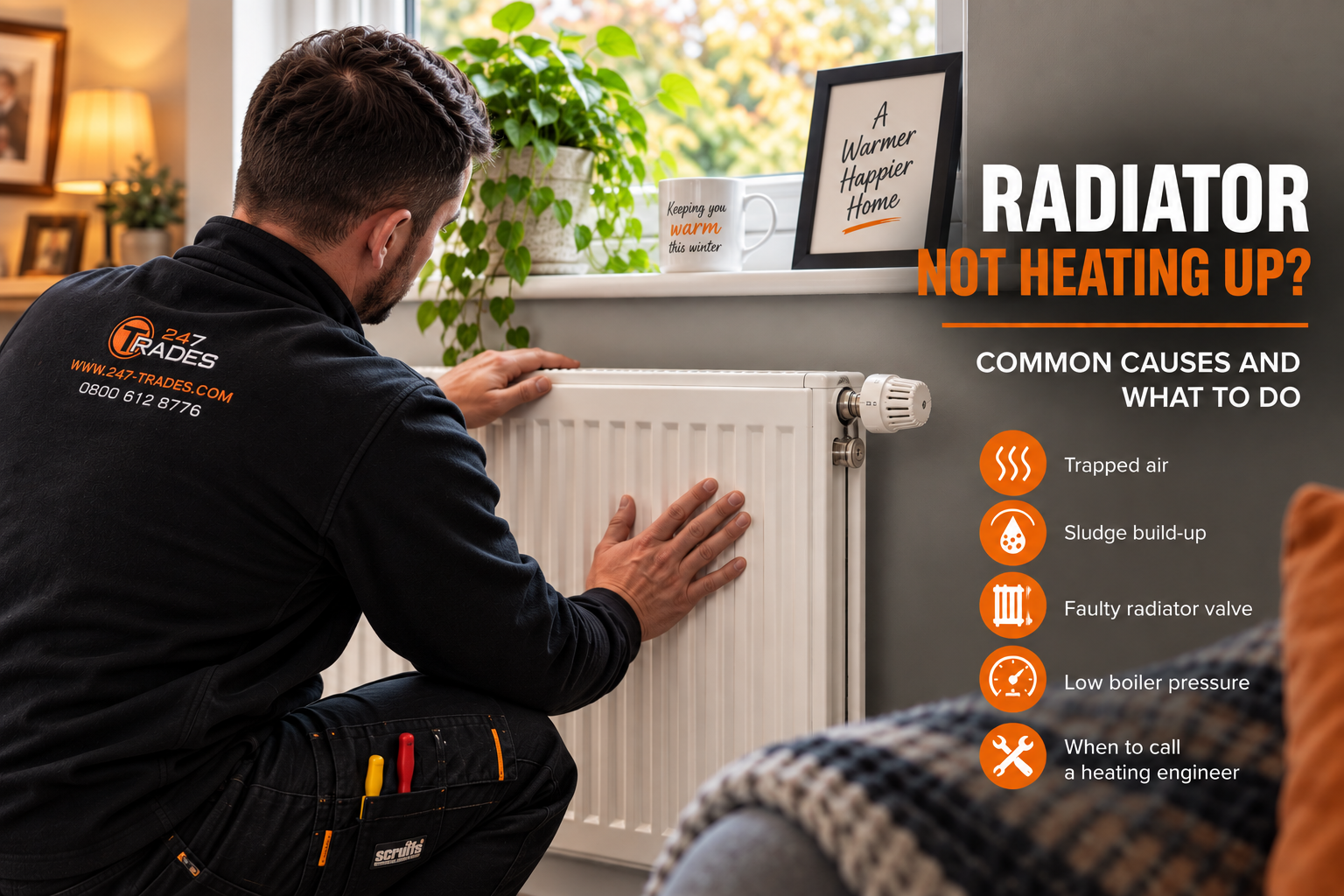
If a radiator is cold at the top but warmer at the bottom, trapped air could be preventing the hot water from circulating through the whole radiator.
Bleeding the radiator may resolve this.
If you do bleed your radiators, remember to check your boiler pressure afterwards because releasing air from the system can cause the pressure to drop.
A radiator that is warm at the top but noticeably cold across the bottom can point towards a different problem, such as a build-up of sludge or debris within the radiator or heating system. Check out our post on power flushing, you may need this carried out .
If several radiators have cold areas, take a long time to heat up or you’re continually having circulation problems, the system may need further investigation rather than simply bleeding the radiators.
4. One radiator isn’t heating up — but all the others are
If the rest of your heating is working normally but one radiator remains cold, the boiler itself is unlikely to be the first place to look.
Check the radiator valves haven’t been turned off during the summer.
If it has a thermostatic radiator valve (TRV), make sure it isn’t set to its lowest or frost-protection setting.
TRV pins can also sometimes become stuck after being left in one position for a long period. If the valve appears to be open but the radiator still doesn’t heat up, don’t force it. A heating engineer can check whether the valve is operating correctly and replace it if necessary.
5. Check your thermostat and heating controls
Sometimes the heating system itself is perfectly capable of working — it simply isn’t being told to come on.
Check that:
- your thermostat is calling for heat
- the programmed heating times are correct
- the clock hasn’t reset
- batteries in wireless thermostats haven’t gone flat
- smart heating controls are connected and responding correctly
- the boiler hasn’t been left in a summer or hot-water-only setting
If you’ve changed broadband provider, Wi-Fi router or network details since you last regularly used the heating, it’s also worth checking that any smart heating controls are still connected correctly.
6. Listen for noises that weren’t there before
Central heating systems aren’t completely silent, so an occasional click or the sound of water moving through pipework isn’t automatically a cause for concern.
What you’re looking for is something different from normal.
Gurgling radiators can indicate trapped air, while persistent banging, knocking, whistling or other unusual noises may need further investigation.
If the system suddenly sounds noticeably different from how you remember it, it’s better to investigate the cause rather than simply turning the heating up and hoping it disappears.
7. Don’t ignore recurring problems
Some heating problems can be temporarily resolved by resetting the boiler, bleeding a radiator or topping up the system pressure.
The important word there is temporarily.
If you regularly have to:
- reset your boiler
- re-pressurise the system
- bleed the same radiator
- turn a troublesome radiator valve backwards and forwards
- clear the same fault code
there’s probably an underlying reason.
For example, repeatedly falling system pressure can indicate a leak or another fault within the heating system.
Getting recurring problems investigated early can also be considerably more convenient than discovering the system has finally stopped working on a freezing evening.
Should I have my boiler serviced before winter?
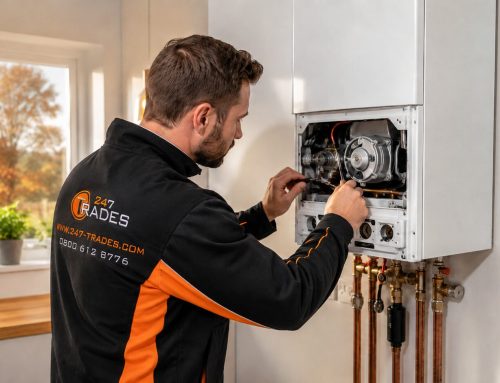
If your boiler hasn’t been serviced within the last year, the period before winter is a sensible time to get it booked in.
A boiler service isn’t simply about waiting until something breaks.
Regular servicing gives the engineer an opportunity to check the appliance is operating correctly and safely and identify issues that may require attention.
Most importantly, gas boilers and other gas appliances must only be worked on by an appropriately qualified Gas Safe registered engineer.
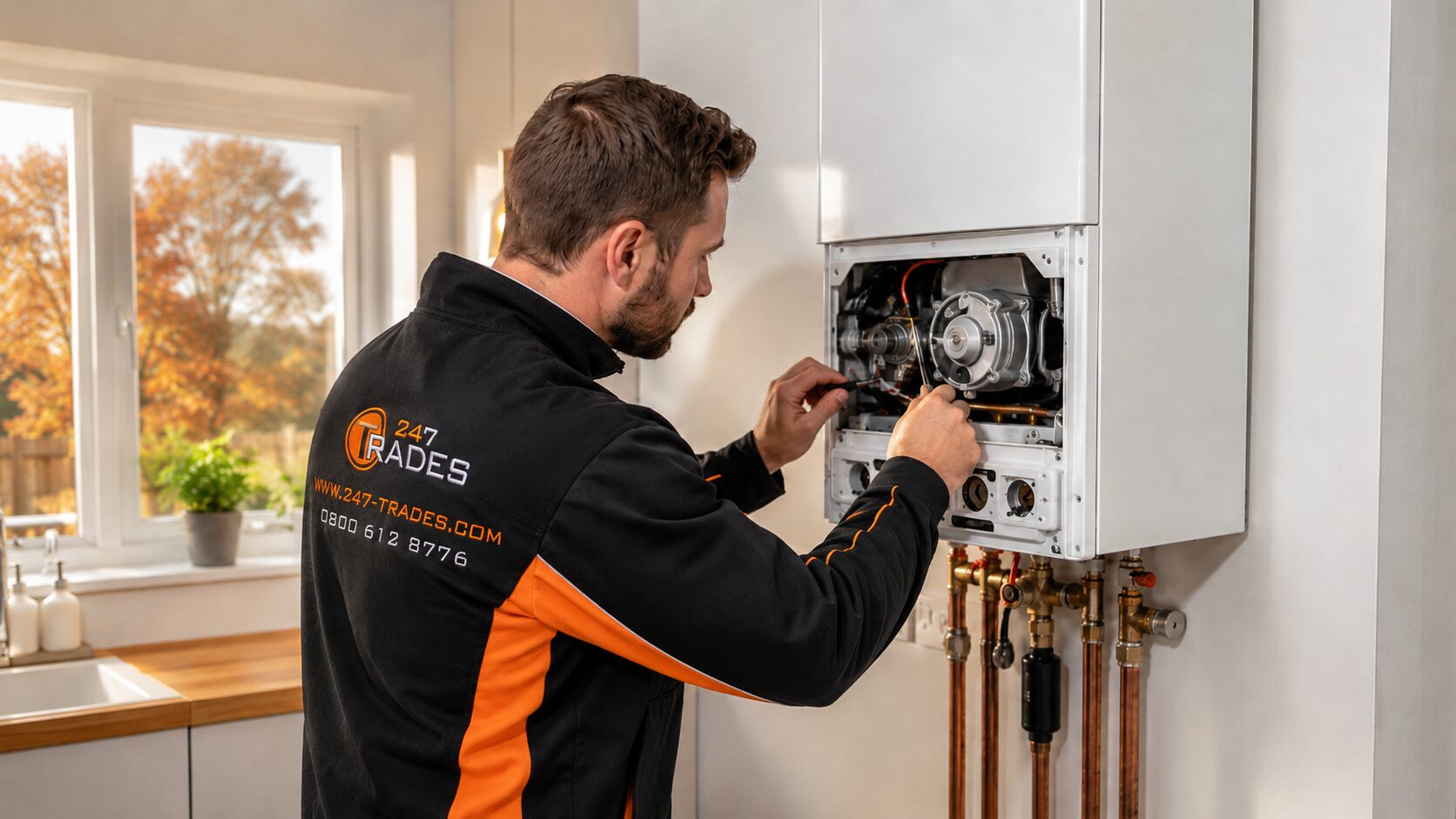
Never remove the boiler casing or attempt repairs to the gas appliance yourself.
A quick word about carbon monoxide
You can’t see, smell or taste carbon monoxide, which is why a working carbon monoxide alarm is so important in homes containing fuel-burning appliances.
If a carbon monoxide alarm activates, or you suspect carbon monoxide may be present, don’t ignore it.
Stop using the suspected appliance if you can do so safely, get into fresh air and seek the appropriate emergency advice.
A carbon monoxide alarm is an important safety measure, but it isn’t a substitute for having gas appliances correctly installed and maintained.
When should you call a heating engineer?
Some straightforward homeowner checks are perfectly reasonable. However, we’d recommend getting professional advice if:
- your boiler repeatedly loses pressure
- the boiler continually needs resetting
- several radiators aren’t heating properly
- you have persistent cold spots or circulation problems
- there is water leaking from the boiler, radiators or heating pipework
- you’re getting recurring boiler fault codes
- the boiler or heating system is making unusual noises
- your controls aren’t operating the heating correctly
- you’re unsure whether the boiler is operating safely
And, of course, anything involving work on a gas boiler itself should be left to a suitably qualified Gas Safe registered engineer.
Get your heating ready before the cold weather arrives
Finding a heating problem in September is inconvenient.
Finding exactly the same problem on the first freezing evening of winter is considerably worse.
Giving your heating a test run now means you can check the boiler, radiators and controls while there’s still plenty of time to put things right.
At 24/7 Trades Ltd, we help homeowners with central heating faults, radiator problems, heating controls, boiler servicing and repairs across Ilford, Redbridge, Hainault and the surrounding East London and Essex areas, including IG4, IG5, IG6, IG7, IG8, IG9 and IG10.
If you’ve switched your heating back on and something doesn’t seem quite right, get in touch and we’ll be happy to help
Frequently Asked Questions
Why won’t my heating come on after summer?
Start by checking your thermostat, programmer or smart heating controls, followed by the boiler pressure and boiler display for any fault codes. If the controls are calling for heat but the boiler still isn’t responding, further investigation may be required.
Why is my boiler working but my radiators are cold?
There are several possible causes, including trapped air, closed or faulty radiator valves, circulation problems or sludge within the heating system. If all of the radiators are affected, the problem may be elsewhere within the system.
Should I bleed my radiators before winter?
You don’t need to bleed radiators simply because summer has ended. However, if a radiator is cold towards the top while the bottom becomes warm, trapped air may be present and bleeding it could help. Always check your system pressure afterwards.
What pressure should my boiler be?
For many sealed domestic heating systems, the pressure when cold will normally be around 1 to 1.5 bar, but the correct pressure varies between appliances. Check the manufacturer’s instructions for your boiler. If the pressure continually drops after being restored, arrange for the system to be investigated.
Why is only one radiator cold?
If every other radiator is working, first check the valves on the affected radiator. A thermostatic radiator valve may be turned down or its internal pin may have become stuck. Trapped air can also prevent part or all of a radiator from heating correctly.
Why do I keep having to top up my boiler pressure?
Central heating systems shouldn’t require constant re-pressurising. If the pressure repeatedly falls, there may be a leak or another fault within the system. Continually topping it up without investigating the cause isn’t a long-term solution.
Should I get my boiler serviced before winter?
If your boiler is due its annual service, getting it done before the main heating season is a sensible idea. It also means any issues can be identified before you become heavily reliant on the heating.
Do you cover my area?
24/7 Trades provides heating and property maintenance services across our local East London and Essex service area, including Ilford, Redbridge, Hainault and surrounding areas across IG4, IG5, IG6, IG7, IG8, IG9 and IG10. Contact us if you’re unsure whether we cover your postcode.